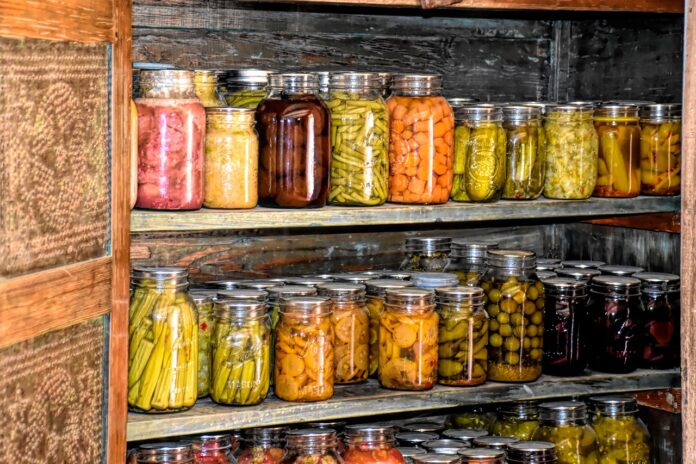
You can build a working root cellar pantry for almost nothing by using the coolest, darkest spot you already have, such as an unheated basement corner, and adding shelving, a thermometer and a hygrometer. Spending more buys better temperature and humidity control, from an insulated, vented closet to a buried or fully excavated cellar. Whatever the budget, the goal is the same: cool, dark, stable conditions with the right humidity for each type of food.
This guide covers the conditions a root cellar needs, four build options from free to major project, how to organize what you store, and the maintenance that keeps food from spoiling.
What a Root Cellar Actually Does
A root cellar slows the natural processes that make produce soften, sprout, shrivel or rot. It does this with three things:
- Cool temperatures, roughly 32 to 50°F for most produce, which slow respiration and mold growth
- Appropriate humidity, high for most root vegetables so they do not dry out, lower for onions, garlic and squash
- Darkness and ventilation, which prevent sprouting and greening and let gases such as ethylene escape
Stability matters as much as the exact number. A space that stays at a steady 45°F usually outperforms one that swings between 35°F and 60°F.
Option 1: A Basement Corner (Little or No Cost)
The north or northeast corner of an unheated basement, on an exterior wall and away from the furnace, water heater and laundry, is often naturally cooler than the rest of the house. To set it up:
- Place a thermometer and hygrometer in the spot for a week or two to see how it performs across day and night.
- Add open shelving (wood or wire) that keeps food off the floor.
- Use bins, crates or buckets of slightly damp sand or sawdust for root vegetables that need high humidity.
- Cover any window to block light, or partition the corner with a simple curtain or insulation board.
This is the best place to start because it lets you learn how your household uses stored food before spending money.
Option 2: A Converted Closet or Crawlspace (Low to Moderate Cost)
An exterior-facing closet, an unheated porch room or a space over a crawlspace can be turned into a small cold room. Typical upgrades:
- Insulate the interior walls and door that face heated rooms, so warmth from the house does not leak in
- Leave the exterior walls uninsulated on the inside, so outdoor cold can cool the room
- Add two vents: a low intake bringing in cold outside air and a high exhaust letting warm air out, both with screens and dampers you can close
- Weatherstrip the door to hold temperature and keep pests out
Check local building codes if you are cutting vents through exterior walls, and make sure the space cannot freeze solid in the coldest weather.
Option 3: Buried Containers (Moderate Cost)
For those with a yard, burying a container lets the surrounding soil moderate temperature. Common approaches include a food-safe plastic barrel or a metal trash can buried on its side or upright in a well-drained spot, with the lid at or just above ground level, covered with straw and a tarp in winter. Layer vegetables with straw inside and take out what you need every week or two.
These work best in climates with cold winters and need a site where water will not pool. Always use clean, food-safe containers.
Option 4: A Dedicated or Dug-In Cellar (Major Project)
A purpose-built cellar, whether dug into a hillside, built under a porch or excavated as a separate room, gives the most consistent conditions and the most space. It also involves real excavation, drainage planning, ventilation design and, often, permits. Get advice from a builder or structural engineer before digging, call 811 to locate underground utilities, and never work in an unsupported trench.
Comparing Your Options
| Option | Relative cost | Effort | Temperature control | Best for |
|---|---|---|---|---|
| Basement corner | Very low | Low | Fair | Testing the idea, small harvests |
| Converted closet or crawlspace | Low to moderate | Moderate | Good | Homes without a basement |
| Buried containers | Moderate | Moderate | Good in cold climates | Gardeners with yard space |
| Dedicated cellar | High | High | Best | Large gardens and long-term storage |
Root Cellar Options for Apartments
Can an apartment have any version of a root cellar? A scaled-down one, yes. An unheated balcony storage box in a cool climate, a closet on an exterior wall, the floor of a cool pantry, or an insulated cooler kept in the coldest part of the home can all hold potatoes, onions, apples and squash for longer than a warm kitchen counter. Monitor temperature, protect food from freezing on a balcony, and keep quantities small.
What Goes Where: Storage Conditions by Food
| Food | Conditions | Storage tips |
|---|---|---|
| Carrots, beets, parsnips, turnips | Cold and very humid | Remove tops; pack in damp sand or sawdust |
| Potatoes | Cool, humid and fully dark | Keep out of light to prevent greening; store away from onions and apples |
| Apples and pears | Cold and humid | Wrap individually or keep separate; they release ethylene |
| Onions and garlic | Cool and dry | Cure first; store in mesh bags or braids with airflow |
| Winter squash and pumpkins | Cool to moderate and fairly dry | Cure first; store in a single layer, not touching |
| Home-canned and dry goods | Cool, dry and stable | Keep off damp walls to avoid rusty lids |
Store only sound, unbruised produce. One damaged apple or potato can spoil the ones around it.
Jars and Containers for Pantry Staples
Dry staples such as beans, rice, oats and flour keep better in sealed glass jars than in paper bags, which let in moisture and pests. Checking a guide to mason jar sizes makes it easier to match containers to how fast you use each item: pints or quarts for things you open often, half-gallons for bulk goods. Uniform jars also stack neatly and make rotation easier. Home-canned food should be processed using tested methods, stored cool and dark, and checked for bulging lids or leaks before use.
Monitoring Temperature and Humidity
A digital thermometer-hygrometer that records minimum and maximum readings is the most useful tool you can buy. Check it at least weekly, and more often in spring and fall when outdoor temperatures swing. If humidity is too low, set out trays of water or dampen the floor or storage sand. If it is too high and you see condensation or mold, increase ventilation.
Seasonal Adjustments
- Fall: open vents on cold nights to bring temperatures down, and close them during warm days.
- Winter: reduce ventilation during deep cold to prevent freezing.
- Spring: use up remaining produce as temperatures rise; most root cellars struggle to stay cool once the weather warms.
- Summer: use the space mainly for canned and dry goods, and clean it before the next harvest.
A Simple Rotation System
Label everything with its storage date, put new items at the back and older items at the front, and check produce every week or two. Remove anything soft, sprouting or moldy immediately. A notebook or whiteboard listing what is stored helps prevent forgotten jars.
Common Mistakes to Avoid
- Storing apples next to potatoes or carrots, which can cause sprouting or bitterness
- Skipping curing for onions, garlic and squash
- Washing root vegetables before storage, which can encourage rot; brush off excess soil instead
- Letting the space freeze or overheat because no one checked the thermometer
- Poor ventilation that lets moisture and ethylene build up
Frequently Asked Questions
What temperature should a root cellar be?
Most produce stores best between about 32 and 50°F, with steady conditions being more important than hitting an exact number. Onions, garlic and squash prefer a slightly warmer, drier spot.
How long does root cellar storage keep vegetables fresh?
It varies by crop and conditions. Well-stored potatoes, carrots, beets, cabbage and winter squash can often last for months instead of the days or weeks they would last at room temperature.
Do I need special shelving for a root cellar?
No. Basic wood or wire shelving works well as long as it allows airflow and keeps food off the floor.
Can I build a root cellar without a basement?
Yes. A converted exterior closet, buried containers in the yard or an insulated storage box in a cool spot can all work, depending on your climate.
Why are my stored potatoes sprouting?
Sprouting usually means the space is too warm or too bright, or the potatoes are near apples or onions. Move them somewhere cooler and darker, and store them separately.