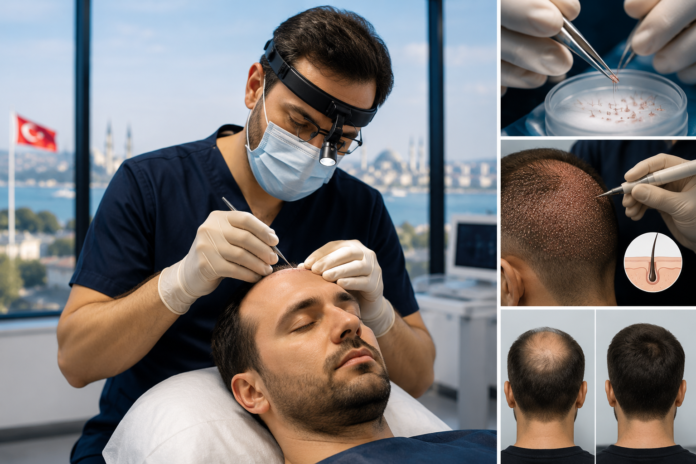
Turkey, and Istanbul in particular, remains one of the most popular places to get a hair transplant in 2026 because experienced surgeons, FUE and DHI techniques and all-inclusive packages are available at lower prices than in the U.S. or Western Europe. Results depend far more on who performs the surgery, how the donor area is managed and whether you are a good candidate than on the destination itself. This guide uses Dr. Resul Yaman’s Istanbul clinic as an example of what to look for, and explains how to judge any clinic you are considering.
Why People Travel to Turkey for Hair Restoration
Patients usually cite three reasons: cost, surgeon experience built on high case volumes, and packages that bundle surgery with accommodation, transfers and aftercare. The downside of that popularity is variation in quality. Some clinics are led by surgeons who perform the critical steps themselves; others rely heavily on technicians and handle many patients a day. Knowing the difference is the most important part of planning.
FUE vs. DHI: The Main Techniques Explained
Both techniques move follicular units (small groups of one to four hairs) from a donor area, usually the back and sides of the scalp, to thinning areas. They differ mainly in how the grafts are placed.
| FUE (Follicular Unit Extraction) | DHI (Direct Hair Implantation) | |
|---|---|---|
| Extraction | Individual grafts removed with a small punch | Same as FUE |
| Recipient sites | Channels opened first with blades (steel or sapphire), then grafts inserted | Grafts loaded into an implanter pen that creates the site and places the graft in one step |
| Strengths | Efficient for large areas; precise hairline design with fine blades | Good control of angle and depth; useful for dense packing between existing hair |
| Considerations | Requires careful handling of grafts outside the body | Often slower; may cost more |
Many surgeons combine methods. Dr. Yaman’s clinic describes using manual punch FUE extraction, sapphire blades to open sites in the frontal hairline, and an implanter pen DHI approach in the crown. If you are researching a DHI hair transplant in Turkey, ask any clinic which steps use which tool and why, rather than treating the technique name as a guarantee of quality.
Who Is a Good Candidate?
A hair transplant redistributes existing hair; it does not create new follicles. A good candidate usually has:
- Enough donor hair of reasonable density to cover the planned area
- Relatively stable hair loss, ideally after a period of medical management
- A confirmed diagnosis, such as male or female pattern hair loss, rather than a condition like alopecia areata or hair loss from thyroid problems or nutritional deficiency that needs different treatment
- Realistic expectations about density and the need for future care
Age matters. Younger patients may continue losing hair around the transplanted area, so a hairline designed too low or too aggressively at 22 can look unnatural at 45. Many surgeons recommend medical treatment such as minoxidil or, for men, finasteride alongside surgery to slow ongoing loss; discuss the benefits and side effects with a doctor. The American Academy of Dermatology’s hair transplant overview explains who tends to get good results and what recovery involves.
Donor Area Management
The donor area is a limited, non-renewable resource. Over-harvesting can leave the back of the head visibly thin and limit options for future procedures. Responsible surgeons:
- Spread extractions evenly across the safe donor zone
- Plan graft numbers around both current needs and likely future loss
- Avoid promising very high graft counts in a single session to patients with limited donor supply
Dr. Yaman emphasizes protecting the donor area for long-term outcomes, which is the right priority. Ask any clinic how many grafts it plans to take, from where, and how much donor reserve will remain.
Hairline Design and Natural Results
The hairline is what people notice first. Natural designs usually:
- Use single-hair grafts at the front edge with slight irregularity rather than a straight line
- Place denser multi-hair grafts just behind the front edge
- Match the patient’s age, face shape and temple angles
- Follow the natural angle and direction of growth, which differs across the scalp
Ask whether the surgeon personally designs the hairline and makes the recipient incisions, since these steps largely determine how natural the result looks. Dr. Yaman’s clinic states that he designs hairlines and creates recipient sites himself and limits the number of patients operated on each day.
Different hair types
Afro-textured hair has curved follicles beneath the skin, which makes extraction more technically demanding and requires adjusted punch techniques. Straight, coarse hair common in East Asian patients has different angles and density patterns. Ask to see results in patients with hair like yours.
What a Typical Trip Looks Like
- Online consultation: you send photos and medical history; the clinic proposes a plan and graft estimate.
- Arrival and in-person assessment: the surgeon confirms the plan, draws the hairline and orders any blood tests.
- Surgery day: usually one long day under local anesthesia.
- Next-day check and first wash: the clinic reviews the grafts and shows you how to care for them.
- Return home: most patients fly back within a few days, with written aftercare instructions and follow-up by message or video.
Expect redness and scabbing for one to two weeks. Transplanted hairs commonly shed within the first weeks; new growth typically starts around three to four months, with final results often taking 12 to 18 months.
How to Evaluate a Clinic
- Who does what? Ask which steps the surgeon performs personally and which are done by technicians.
- Daily patient numbers: fewer patients per surgeon per day usually means more attention to each case.
- Credentials and memberships: check the surgeon’s medical qualifications and memberships such as ISHRS or the International Alliance of Hair Restoration Surgeons. The IAHRS Hair Transplant Turkey page lists member surgeons in the country, so you can verify a clinic’s claims for yourself.
- Before-and-after evidence: look for consistent, well-lit photos and videos at 12 months or later.
- What the package includes: surgery, medications, PRP if offered, hotel, transfers, interpreter and follow-up. Confirm what is excluded.
- Guarantees in writing: read the conditions for any touch-up policy carefully.
- Aftercare access: how you reach the team after you return home, and what happens if complications arise.
Clinics such as Dr. Yaman’s present doctor-led hair transplant Turkey packages, and comparing two or three clinics against the list above is the best way to see which offers the right balance of surgeon involvement, transparency and price for you.
Risks and Red Flags
Possible complications include infection, prolonged swelling, numbness, cysts, poor graft growth, visible donor thinning and an unnatural hairline. Red flags include very low prices with unlimited graft counts, no named surgeon, pressure to book immediately, and refusal to tell you who will perform each step.
When to See a Professional
See a dermatologist before booking surgery to confirm the cause of your hair loss and whether medical treatment should come first. After surgery, contact your clinic or a local doctor promptly for spreading redness, pus, fever, severe or worsening pain, or swelling that keeps increasing after the first few days.
Frequently Asked Questions
Is a hair transplant in Turkey safe?
It can be when performed by a qualified, experienced surgeon in a well-run clinic. Safety depends on the surgeon’s involvement, hygiene standards and honest patient selection rather than the country.
What is the difference between FUE and DHI?
Both extract grafts the same way. FUE opens recipient channels first and then places grafts, while DHI uses an implanter pen to create the site and insert the graft in one step.
When will I see results?
Transplanted hairs usually shed in the first weeks. New growth often starts around three to four months, and final results typically take 12 to 18 months.
Am I a good candidate for a hair transplant?
Good candidates have enough donor hair, relatively stable hair loss, a confirmed diagnosis such as pattern hair loss, and realistic expectations. A consultation with a dermatologist or hair surgeon can confirm this.
How do I check a Turkish clinic’s credentials?
Confirm the surgeon’s name and qualifications, check professional memberships such as IAHRS or ISHRS, review long-term before-and-after results, and ask in writing who performs each step.