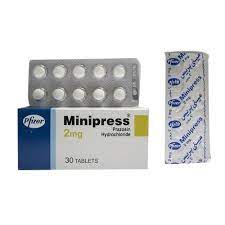
Minipress is a prescription medication that is commonly used to treat hypertension (high blood pressure). The medication is classified as an alpha-blocker, which means it works by relaxing the blood vessels, allowing blood to flow more easily through them. Minipress is available in the form of oral tablets and is usually taken once or twice daily, as directed by a healthcare provider.
Uses of Minipress
Minipress is primarily used in the treatment of hypertension. The medication works by relaxing the muscles in the walls of the blood vessels, allowing blood to flow more freely. This helps to lower blood pressure and prevent the development of conditions such as stroke, heart attack, or kidney disease.
In some cases, Minipress may also be used to treat Raynaud’s disease, a condition in which the fingers and toes become numb and cold due to reduced blood flow. The medication may also be used to treat symptoms of benign prostatic hyperplasia (BPH), a condition that affects the prostate gland in men.
Benefits of Minipress
One of the primary benefits of Minipress is its ability to effectively manage high blood pressure. The medication works quickly, helping to lower blood pressure and reduce the risk of complications such as heart attack or stroke. Additionally, Minipress has been shown to improve symptoms of Raynaud’s disease, reducing the frequency and severity of attacks.
For men with BPH, Minipress can provide relief from symptoms such as difficulty urinating, frequent urination, and urinary urgency. The medication works by relaxing the muscles in the prostate gland and bladder, allowing urine to flow more freely.
Side Effects of Minipress
Like all medications, Minipress can cause side effects in some patients. Common side effects of Minipress include drowsiness, dizziness, headache, and nausea. These side effects are typically mild and may improve over time.
More serious side effects of Minipress can include fainting, irregular heartbeat, and shortness of breath. Patients experiencing these symptoms should seek medical attention immediately.
In rare cases, Minipress may also cause a condition known as priapism, which is a painful erection that lasts for an extended period of time. Patients experiencing priapism should seek medical attention right away to avoid permanent damage.
Warnings for Minipress
Before taking Minipress, patients should inform their healthcare provider of any medical conditions they have, including kidney or liver disease, heart disease, or any history of fainting or low blood pressure. Patients should also disclose any other medications, supplements, or herbal remedies they are currently taking, as these may interact with Minipress and cause unwanted side effects.
Patients should not drive or operate heavy machinery while taking Minipress, as the medication has the potential to cause drowsiness and dizziness. Additionally, patients should avoid consuming alcohol while taking Minipress, as this can increase the risk of side effects such as fainting or lightheadedness.
Minipress is not recommended for use in pregnant women or women who are breastfeeding. Patients with a history of allergy to Minipress or any of its ingredients should avoid using the medication.
FAQs About Minipress
Minipress is usually taken once or twice daily, as directed by a healthcare provider. The medication should be taken with a glass of water and can be taken with or without food.
Patients should avoid consuming alcohol while taking Minipress, as this can increase the risk of side effects such as fainting or lightheadedness.
The most common side effects of Minipress include drowsiness, dizziness, headache, and nausea. These side effects are typically mild and may improve over time.
Yes, Minipress is often used to treat Raynaud’s disease. The medication works by relaxing the blood vessels, improving blood flow to the fingers and toes.
Yes, Minipress is a prescription medication and can only be obtained with a valid prescription from a healthcare provider.






 the medication is classified.)