A high-quality yoga mat gives you reliable grip, enough cushioning to protect your joints, and a stable surface that helps you hold poses with good form. For a daily practice, those qualities add up: you slip less, your knees and wrists feel better, and the mat lasts long enough to justify its cost. This guide explains what actually makes a mat “high quality,” how to match one to your practice, and how to care for it so it keeps performing.
Why the Mat Matters More When You Practice Daily
If you do yoga once a week, almost any mat will get you through a class. When you practice every day, small shortcomings become obvious. A mat that turns slick once you start to sweat makes downward dog feel precarious. One that is too thin leaves your knees sore after low lunges. A mat that stretches or bunches up forces you to keep adjusting it instead of focusing on your breath.
Yoga itself has well-documented benefits for flexibility, balance and stress, and the National Center for Complementary and Integrative Health’s overview of yoga summarizes what the research does and does not show. It also notes that injuries can happen, most often sprains and strains. A good mat will not make yoga risk-free, but a stable, non-slip surface removes one avoidable source of trouble.
The Real Benefits of a Better Mat
Grip that holds when you sweat
Grip is the single most important feature for most people. Standing poses, balances and inversions all depend on your hands and feet staying put. Look for a surface texture that feels slightly tacky when dry and does not turn slippery when damp. Hot yoga and vigorous flow styles demand more grip than gentle or restorative classes.
Cushioning without wobble
Cushioning protects pressure points such as knees, hips, elbows and the spine during floor work. But more is not always better: a very thick, soft mat can feel unstable in standing balances because your foot sinks in. Most general-purpose mats aim for a middle ground of around 4 to 6 mm, which suits a wide range of styles.
Alignment support
Some mats include printed guidelines that mark the center line and suggested positions for hands and feet. These can help beginners place themselves consistently and make it easier to notice when a stance has drifted. They are a guide, not a substitute for instruction from a qualified teacher.
Durability and value
Cheap mats often flake, tear or lose their grip within months of daily use. A better-built mat may cost more upfront but can last much longer, making it cheaper over time and reducing waste.
Hygiene
Closed-cell surfaces resist absorbing sweat, which makes them easier to wipe clean. Open-cell surfaces often grip better but absorb more moisture, so they need more careful cleaning and drying.
Comparing Common Yoga Mat Materials
| Material | Grip | Cushioning | Weight | Things to know |
|---|---|---|---|---|
| PVC | Good when dry | Moderate | Moderate | Durable and inexpensive, but not biodegradable and can be slick when wet. |
| TPE (thermoplastic elastomer) | Good | Soft and springy | Light | Free of PVC, often recyclable, closed-cell and easy to clean; may wear faster than rubber. |
| Natural rubber | Excellent | Firm and dense | Heavy | Very grippy and stable; not suitable for people with latex allergies and has a rubber smell at first. |
| Cork | Improves with moisture | Thin to moderate | Moderate | Naturally antimicrobial and good for sweaty practice; less cushioning. |
| Cotton or jute | Varies | Low | Light | Traditional and breathable; best for gentle practice or layered over another mat. |
How to Choose the Right Mat for Your Practice
- Match the mat to your style. Vigorous or hot practices need strong wet grip. Restorative and yin yoga benefit from more cushioning. Balance-heavy practices favor a firmer, denser mat.
- Pick a thickness. Around 3 to 4 mm suits travel and balance work; 5 to 6 mm suits most home practice; thicker mats are better for sensitive joints but can feel less stable.
- Check the size. A standard mat is about 68 to 72 inches long and 24 inches wide. Taller people often prefer a longer mat so their head and feet stay on the surface in lying poses.
- Consider weight and portability. If you carry your mat to classes, a lighter material like TPE is easier to manage than heavy rubber.
- Think about allergies and values. Avoid natural rubber if you have a latex allergy. If sustainability matters to you, look for PVC-free materials and clear information from the manufacturer.
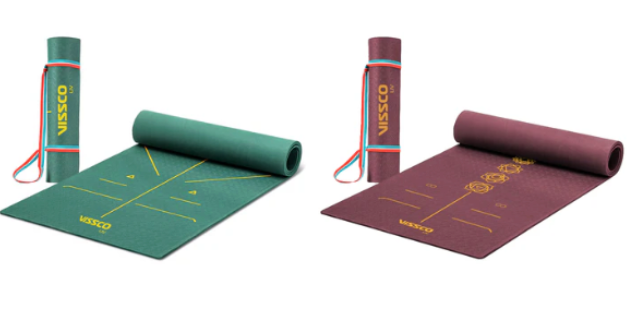
As an example of how these features come together, VisscoNext lists TPE mats measuring 72 by 24 inches at 6 mm thick, a common combination for daily home practice. Its Alignment and Seven Chakras mats add printed alignment markings, which some practitioners find helpful for consistent hand and foot placement. Whichever brand you consider, compare the material, thickness, dimensions and return policy against the checklist above.
Caring for Your Mat
- Wipe the surface after each session with a damp cloth or a mild soap solution recommended by the manufacturer.
- Let the mat dry fully before rolling it, ideally away from direct sunlight, which can degrade some materials.
- Roll the mat loosely with the practice side facing out to help it lie flat.
- Avoid harsh chemicals and essential oils unless the manufacturer says they are safe for your material.
- Replace the mat when it starts to flake, tear or lose grip, as a worn surface increases the chance of slipping.
Common Mistakes to Avoid
- Choosing the thickest mat available and then struggling with balance poses.
- Buying on color or pattern alone without checking material and grip.
- Rolling up a damp mat, which encourages odor and bacteria.
- Using a mat that slides on smooth floors; place it on a stable surface or use a non-slip underlay.
- Expecting a mat to fix alignment problems that a teacher could address.
When to See a Professional
Talk to a doctor or physical therapist before starting a daily yoga routine if you are pregnant, have osteoporosis, glaucoma, high blood pressure, a recent injury or surgery, or ongoing joint or back pain. Stop and seek advice if a pose causes sharp pain, numbness or dizziness. A qualified yoga teacher can also help you modify poses to suit your body.
Frequently Asked Questions
What thickness of yoga mat is best for daily practice?
For most people, 4 to 6 mm offers a good balance of cushioning and stability. Choose thinner for balance work and travel, and thicker if you have sensitive knees or prefer gentle styles.
Is TPE a good yoga mat material?
TPE is light, cushioned, PVC-free and easy to clean, which makes it a practical choice for home practice. It may wear faster than natural rubber with very heavy use.
How often should I clean my yoga mat?
Wipe it down after every session, especially if you sweat, and give it a deeper clean regularly according to the manufacturer’s instructions. Always let it dry before rolling it.
Do alignment lines on a yoga mat help?
They can help you place your hands and feet consistently and notice when your stance drifts. They are most useful alongside guidance from a qualified teacher.
When should I replace my yoga mat?
Replace it when the surface starts flaking, tearing, losing grip or holding odors even after cleaning. A worn mat makes slipping more likely.