Losing a tooth – whether due to decay, injury, or gum disease – can affect far more than just your appearance. It impacts how you chew, how you speak, and even how you feel about your smile. Dental implants have emerged as the gold standard solution for tooth replacement, offering a permanent, natural-looking alternative that most patients describe as life-changing. This guide walks you through everything you need to know, from what implants actually are to what recovery looks like and how to decide if they’re right for you.
What Are Dental Implants?
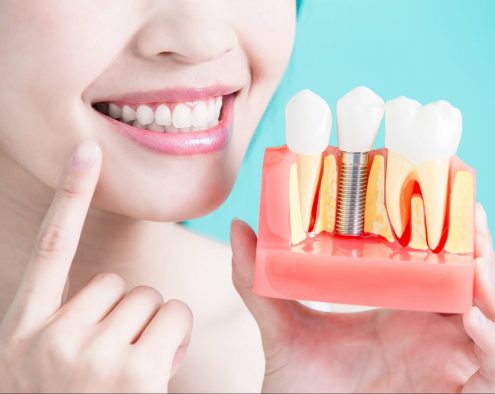
A dental implant is an artificial tooth root – typically a small titanium post – that is surgically placed into the jawbone beneath the gum line. Once it integrates with the bone, it serves as a stable foundation for a replacement tooth, known as a crown. Unlike dentures or bridges, implants are anchored directly into the jaw, meaning they don’t slip, shift, or require adhesives.
The complete implant system consists of three components:
The implant post: The titanium screw embedded into the jawbone, acting as the artificial root.
The abutment: A small connector piece that attaches to the top of the post and supports the crown.
The crown: The visible, tooth-shaped prosthetic that is custom-made to match the color, shape, and size of your natural teeth.
Together, these three parts create a restoration that looks, feels, and functions almost identically to a natural tooth.
Who Is a Good Candidate for Dental Implants?
Dental implants are suitable for most adults who are in reasonably good health, but not everyone qualifies automatically. Your dentist or oral surgeon will evaluate several factors before recommending implants as the right path forward.
Good candidates typically have:
One or more missing teeth they want to replace permanently
A fully developed jawbone (implants are generally not placed in patients still in adolescence)
Adequate bone density and volume to support the implant post
Healthy gums free from active periodontal disease
No uncontrolled systemic conditions, such as unmanaged diabetes, that could impair healing
Factors that may complicate candidacy include:
Heavy smoking, which significantly reduces implant success rates and impairs healing
Bone loss in the jaw – though bone grafting can often resolve this
Certain medications, such as bisphosphonates used for osteoporosis, which can affect bone metabolism
A history of radiation therapy to the head or neck area
The good news is that many of these obstacles are not absolute disqualifiers. Bone grafting, for example, can rebuild lost jawbone volume over time, eventually making implant placement viable for patients who were initially told they lacked sufficient bone.
Types of Dental Implants
Not all implant procedures are the same. The right type depends on your specific anatomy, the number of teeth being replaced, and your overall oral health.
Endosteal implants are the most common type, placed directly into the jawbone. They are suitable for most patients and offer the highest long-term success rates.
Subperiosteal implants sit on top of the jawbone but beneath the gum tissue. These are used in cases where patients do not have enough healthy jawbone for endosteal placement and prefer not to undergo bone grafting.
All-on-4 implants are a full-arch solution where an entire set of upper or lower teeth is supported by just four strategically placed implants. This approach is ideal for patients who have lost most or all of their teeth and want a fixed, permanent alternative to removable dentures.
Mini implants are narrower than standard implants and are sometimes used in areas with limited bone or to stabilize lower dentures. They involve a simpler placement procedure but are generally less robust than full-size implants.
The Dental Implant Procedure: Step by Step
Understanding the full timeline helps set realistic expectations. The implant process is not a single appointment – it unfolds over several months and involves multiple stages.
Initial consultation and planning
Your dentist will conduct a comprehensive examination, including dental X-rays and often a 3D CBCT scan, to assess your bone density, anatomy, and the precise positioning needed for implant placement. A personalized treatment plan is then developed.
Tooth extraction (if needed)
If the damaged tooth is still present, it will be removed before or at the time of implant placement, depending on the case.
Bone grafting (if needed)
Patients with insufficient bone volume will need a grafting procedure first. Bone graft material – either from your own body, a donor, or a synthetic source – is placed at the site to stimulate new bone growth. This phase can add three to six months to the overall timeline, as the graft needs time to integrate before the implant can be placed.
Implant post placement
During a surgical appointment, the titanium post is inserted into the jawbone under local anesthesia. Sedation options are available for anxious patients. The gum is then closed over or around the implant, and a healing period begins.
Osseointegration
This is the critical phase where the implant fuses with the surrounding bone – a process called osseointegration. It typically takes three to six months. During this time, the implant becomes as stable as a natural tooth root. Patients generally wear a temporary crown or restoration during this period.
Abutment placement
Once osseointegration is confirmed, a small connector – the abutment – is attached to the implant post. In some cases, this is placed at the same time as the implant itself.
Crown placement
Impressions or digital scans of your teeth are taken to fabricate your permanent crown. Once ready, it is attached to the abutment, completing the restoration. Your dentist will check your bite and make any final adjustments.
Benefits of Dental Implantss
The reasons implants have become the preferred tooth replacement solution are well-supported by decades of clinical research.
They preserve jawbone. When a tooth is lost, the jawbone beneath it begins to deteriorate – a process called bone resorption. Implants are the only tooth replacement option that stimulates the bone just like a natural root, halting this loss and preserving your facial structure over time.
They look and function naturally. Because the crown is custom-fabricated and the implant is anchored in bone, patients typically report that implants feel indistinguishable from their natural teeth. There’s no clicking, no movement, and no dietary restrictions once fully healed.
They protect neighboring teeth. Traditional bridges require grinding down the adjacent teeth to serve as anchors. Implants are self-supporting, leaving surrounding healthy teeth completely untouched.
They are long-lasting. With proper oral hygiene and regular dental visits, implants can last decades – often a lifetime. The implant post itself is designed to be permanent; only the crown may eventually need replacement after 10 to 15 years of normal wear.
They improve quality of life. Patients report improvements in confidence, comfort when eating, and overall self-esteem. Unlike removable dentures, implants require no special cleaning routines or adhesives – you simply brush and floss as you would with natural teeth.
Success Rates and What the Research Says
Dental implants have one of the highest success rates of any surgically implanted device in medicine. Studies consistently report long-term success rates of 95% or higher over a ten-year period for patients without significant risk factors. For patients researching implant providers and wanting to understand what influences outcomes – from surgical technique to aftercare protocols – resources like dental-matters.com offer well-organized, clinically grounded information that can help you ask better questions during your consultation.
Factors that most strongly influence success include the patient’s overall health, bone quality at the implant site, the experience of the placing clinician, and adherence to post-operative care instructions.
Recovery and Aftercare
Most patients are surprised by how manageable recovery is after implant placement. The surgical site will be sore for several days, and some swelling and bruising are normal.
In the first 48 to 72 hours:
Take prescribed or over-the-counter pain relievers as directed
Apply a cold compress to the cheek in 20-minute intervals to reduce swelling
Eat soft foods only – soups, yogurt, mashed potatoes, scrambled eggs
Avoid hot beverages, alcohol, and smoking
Do not rinse forcefully or disturb the surgical site
In the weeks following:
Gradually reintroduce normal foods as comfort allows
Brush gently around the implant site; floss carefully
Attend all follow-up appointments so your dentist can monitor healing
Avoid smoking throughout the osseointegration period, as it significantly increases the risk of implant failure
Long-term care is straightforward: brush twice daily, floss regularly, and attend biannual dental check-ups. Your dentist will periodically check the implant’s stability and the condition of the crown.
How Much Do Dental Implants Cost?
Cost is one of the most common concerns patients raise, and it’s a fair one. Dental implants represent a higher upfront investment than bridges or dentures, but their longevity often makes them more economical over time.
In the United States, a single dental implant – including the post, abutment, and crown – typically ranges from $3,000 to $5,000. Costs vary based on geographic location, the complexity of the case, whether bone grafting is needed, and the type of implant used. Full-arch solutions like All-on-4 can range from $20,000 to $30,000 per arch.
Dental insurance coverage for implants is improving, though many plans still classify them as cosmetic and provide limited or no coverage. Flexible Spending Accounts (FSAs) and Health Savings Accounts (HSAs) can be used toward implant costs. Many dental practices also offer financing plans to spread payments over time.
Frequently Asked Questions
The procedure is performed under local anesthesia, so you should feel no pain during placement – only pressure. Post-surgical discomfort is typically manageable with over-the-counter pain relievers and subsides within a few days.
From initial consultation to final crown placement, the process commonly takes six months to over a year, depending on whether bone grafting is required and how quickly osseointegration occurs.
Yes, though it is uncommon. Implant failure most often occurs due to infection, insufficient bone integration, or patient risk factors like smoking or uncontrolled diabetes. Failed implants can often be removed and replaced after proper treatment of the underlying issue.
No. The crown is matched precisely to the color and shape of your surrounding teeth. Most people – including the patient themselves – cannot tell the difference between an implant and a natural tooth.
Dental implants are not the right solution for every patient in every situation, but for those who qualify, they represent the closest thing modern dentistry has to a natural tooth. They protect your bone, preserve your neighboring teeth, and offer a permanent solution that supports your oral health for decades.
The best first step is a thorough consultation with a qualified implant dentist or oral surgeon who can assess your bone structure, health history, and goals. Armed with the right information, you’ll be in the best possible position to make a confident decision about your smile.






