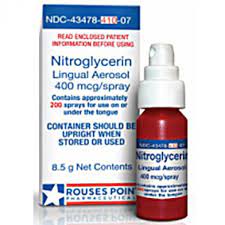
Nitroglycerin Translingual is a medication used to treat and prevent chest pain (angina) caused by coronary artery disease. It belongs to a class of drugs called nitrates, which work by relaxing and widening blood vessels, allowing an increased supply of oxygen and blood to the heart. This article will cover the uses, benefits, side effects, and warnings associated with Nitroglycerin Translingual.
Uses
Nitroglycerin Translingual is primarily used to relieve and prevent angina attacks. It helps to reduce the frequency and severity of these episodes by relaxing the blood vessels and improving blood flow to the heart. This medication is typically administered as a spray under the tongue (sublingually), allowing for quick absorption into the bloodstream. It is important to note that Nitroglycerin Translingual should not be used to treat sudden chest pain or heart attacks; instead, immediate medical attention should be sought.
Benefits
The primary benefit of Nitroglycerin Translingual is its ability to relieve angina symptoms. By relaxing the blood vessels, it allows for improved blood flow to the heart, which reduces chest pain, shortness of breath, and other associated symptoms. This medication can significantly enhance the quality of life for individuals suffering from angina, allowing them to engage in daily activities with less discomfort and restrictions.
Side Effects
As with any medication, Nitroglycerin Translingual may cause certain side effects. Common side effects include headaches, dizziness, lightheadedness, and flushing. These symptoms are usually mild and temporary. However, if they persist or worsen, it is important to consult a healthcare professional. In rare cases, more severe side effects such as blurred vision, rapid heartbeat, or fainting may occur. If any of these occur, immediate medical attention should be sought.
Warnings
There are several important warnings associated with the use of Nitroglycerin Translingual. Firstly, it is crucial to inform your doctor of any allergies to nitrates or other medications before starting this treatment. Additionally, certain medical conditions may interact with Nitroglycerin Translingual, such as low blood pressure, heart valve problems, or recent heart attack or stroke. It is important to disclose your full medical history to your healthcare provider to ensure safe and effective use of this medication.
Furthermore, Nitroglycerin Translingual may interact with other medications, including erectile dysfunction drugs (such as sildenafil or tadalafil), blood pressure medications, or certain antidepressants. These interactions can lead to potentially dangerous drops in blood pressure. Therefore, it is vital to inform your doctor of all medications, both prescription and over-the-counter, that you are taking.
If you are pregnant or breastfeeding, it is important to consult your doctor before using Nitroglycerin Translingual, as its safety during pregnancy or while nursing has not been established. It is also essential to store this medication properly, away from heat and moisture, and to check its expiration date regularly.
Frequently Asked Questions (FAQs)
No, Nitroglycerin Translingual is not intended for immediate relief of sudden chest pain or heart attacks. Seek immediate medical attention in such situations.
When administered sublingually, Nitroglycerin Translingual works rapidly, usually within 1 to 3 minutes.
Nitroglycerin Translingual may cause dizziness or lightheadedness. If you experience these symptoms, it is advisable to avoid driving or operating machinery until you are sure of your reaction to the medication.
The safety and effectiveness of Nitroglycerin Translingual have not been established in children. Consult a pediatrician for alternative treatment options.
Alcohol may increase the risk of side effects such as dizziness or lightheadedness. It is advisable to limit alcohol consumption while using this medication.






 caused by coronary artery disease.)